
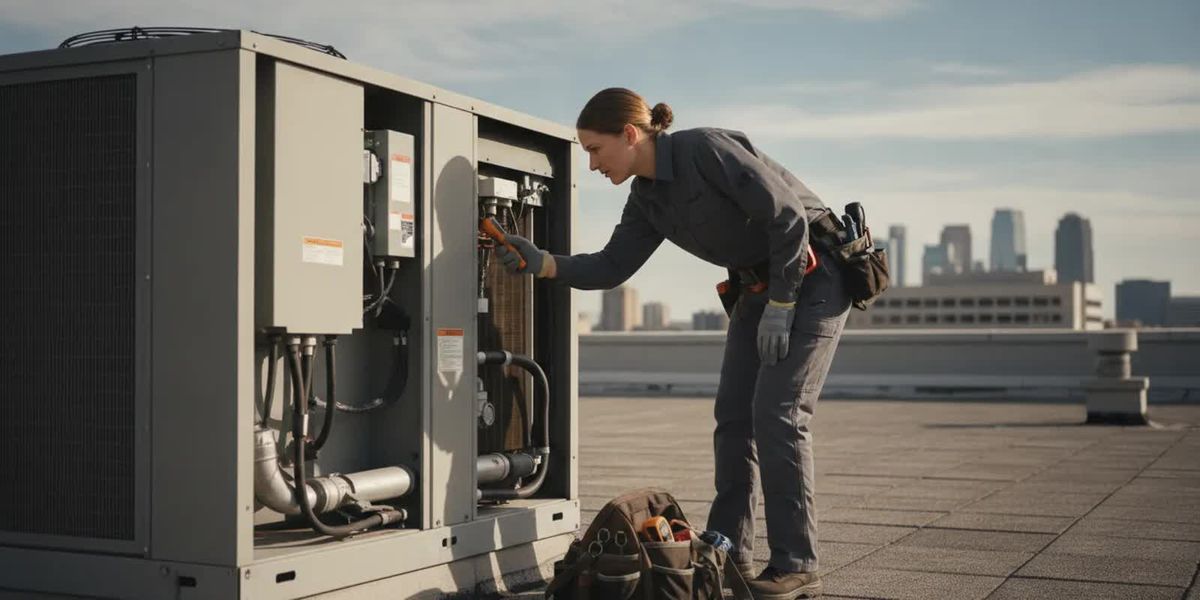
A reliable maintenance routine helps a business spot developing air conditioning problems before they disrupt occupied space or day-to-day operations. A commercial HVAC maintenance agreement can make those recurring checks easier to plan, but the details should fit the equipment and building rather than follow a generic calendar. This checklist gives business owners and facility teams a practical starting point for discussing commercial air conditioning maintenance.
Call to discuss air conditioning maintenance
What commercial air conditioning maintenance should cover
Commercial air conditioning systems include more than the equipment visible on a roof. The full system may include rooftop units, indoor air handlers, system controls, filters, ductwork, condensate drainage, electrical components, and multiple zones. A recurring visit should consider how those parts work together and how the building uses them.
The company describes its preventive maintenance work as including equipment and wiring checks, duct leakage, thermostat function, voltage, refrigerant pressure, and an assessment with a written estimate. Those are useful examples to discuss with a service provider. A maintenance visit is not simply a quick filter change, and no single checklist applies unchanged to every system.
For more detail on the available maintenance service, see commercial HVAC maintenance from B&B Mechanical Services. Use the page as a starting point, then confirm what a proposed visit includes for your equipment, access conditions, and operating schedule.
How to set a recurring schedule
Start with the manufacturer's instructions, equipment condition, building use, and the consequences of an interruption. An office with moderate seasonal use may have different needs from a facility that runs cooling for long hours, serves many occupants, or has equipment exposed to dust and other demanding conditions. The system's history also matters: repeat faults, drainage issues, or unusual noise may call for closer attention than a unit with a stable service record.
Ask the provider to recommend a visit schedule for each system and explain the basis for it. The schedule should identify which checks occur at each visit, what information will be recorded, and which items require a separate repair authorization. It is better to have a clear, equipment-specific plan than to assume a particular number of visits guarantees uninterrupted operation.
List each air conditioning unit, its location, and the area it serves.
Note the equipment model and age when available, along with any relevant manufacturer maintenance instructions.
Record operating hours, seasonal start-up dates, occupancy patterns, and any special comfort or process needs.
Gather past service reports and note recurring alarms, repairs, leaks, temperature complaints, or shutdowns.
Ask which tasks are included in routine maintenance and which would be quoted separately.
For buildings with several units, identify equipment by a consistent label or asset number. That lets the maintenance record show which system was checked, rather than leaving the team to guess whether a general note refers to the rooftop unit over the office, warehouse, or another area.
It can also help to group equipment by the spaces it serves. Note which units support customer areas, offices, production areas, or other operationally important spaces. This does not mean every area requires the same maintenance scope. It gives the provider context for planning access, coordinating work, and understanding which symptoms matter most to the business.
Before the first planned visit, decide how staff will report a concern and who can approve follow-up work. A simple process might ask employees to note the affected space, the time, and what they noticed, then send the information to a designated facility contact. That contact can check whether the issue is recurring, share the equipment label, and coordinate with the service provider. Clear handoffs reduce the chance that a symptom gets lost between occupants, operations, and maintenance records.
Recurring checks for commercial AC equipment
The following checklist is a conversation aid for facility teams. A trained technician should determine which inspections and measurements are appropriate for a particular system and perform work that requires technical expertise. The exact tasks and frequency depend on equipment design, condition, manufacturer instructions, and safe access.
1. Check filters and airflow
Inspect filters for loading, damage, or incorrect fit. A filter that is clogged or does not seat correctly can affect airflow and allow unwanted material to pass around it. The right filter type and replacement interval depend on the system and its operating environment. Ask the technician to record the filter size or specification, condition, and any replacement made.
Airflow complaints also deserve context. Ask whether the technician checked the relevant fans, air paths, and accessible duct connections, and whether the observed condition suggests a larger issue. A filter check by itself will not explain every hot or cold area in a building.
2. Inspect coils and the outdoor unit
Ask for an inspection of accessible evaporator and condenser coil surfaces for dirt, blockage, or visible damage. The outdoor section should have suitable clearance for air movement, with debris or stored items kept away. If a coil needs cleaning, the provider should explain the recommended method and any access or shutdown considerations before work begins.
Make a note of unusual vibration, corrosion, damaged panels, or signs that water or debris is reaching the equipment. A visible observation is not a diagnosis, but documenting it gives the service team a useful point of comparison at the next visit.
3. Review condensate drainage
During cooling, the system can produce condensate that must drain as designed. Ask the technician to inspect accessible drain components for blockage, leakage, or signs of overflow and to report any recurring moisture near the unit. Check nearby ceilings, mechanical-room floors, and other accessible areas for water marks or dampness between scheduled visits.
Water where it should not be can damage building materials or interrupt operations. If staff notice active leakage, they should follow the building's safety and escalation procedures and contact the service provider rather than trying to open or modify equipment themselves.
4. Review electrical components and connections
Electrical inspection and measurements should be completed by a qualified service professional using appropriate safety procedures. The technician can report observed wear, loose or damaged components, unusual readings, or a need for further repair. Ask for findings in plain language and a written estimate when additional work is proposed.
Facility staff can share useful observations without opening electrical compartments: repeated breaker trips, a system that fails to start, a burning odor, or an unexpected loss of cooling should be reported promptly. Do not treat repeated resets as a substitute for diagnosis.
5. Confirm controls and thermostat operation
Ask the technician to verify that thermostats or system controls respond as expected and that schedules and setpoints reflect the building's actual operating plan. Changes made to schedules should be communicated to the people who manage the space. If occupants report that one zone is uncomfortable while another is not, record the location, time, and conditions instead of changing multiple settings without tracking the result.
Controls may have different capabilities depending on system design. A maintenance discussion should clarify which settings the provider reviewed and whether a reported control issue needs additional troubleshooting.
6. Review refrigerant-related condition
A technician may check refrigerant pressure and look into performance concerns as part of system diagnosis and maintenance. Refrigerant should not be treated as a routine top-up item without understanding why the system is not performing as expected. Ask the provider to explain findings, any recommended next steps, and whether a separate repair estimate is needed.
Refrigerant handling is subject to environmental requirements. The U.S. Environmental Protection Agency provides information about its environmental programs at EPA.gov; ask your service provider how applicable requirements and safe work practices apply to the proposed work.
7. Note noise, vibration, and visible condition
Record changes such as a new rattling sound, unusual vibration, loose-looking panels, or repeated short cycling. Include when the issue occurs and whether it affects one unit or several. These observations help a technician investigate the problem, but they do not establish the cause on their own.
Between visits, staff can keep equipment areas clear, avoid blocking accessible air paths, and report changes. They should not remove panels, handle electrical components, or perform tasks outside their training and site procedures.
What to record after every visit
A useful maintenance history makes recurring problems easier to recognize and helps the business make informed decisions about repair, continued maintenance, or eventual replacement. Ask for a report that identifies the equipment and records observations in a consistent format.
Equipment identification: location, unit label, and any available model or serial information.
Work completed: inspections, cleaning, adjustments, and parts replaced, with enough detail to understand the service.
Condition and measurements: readings or findings relevant to the equipment, with context from the technician.
Issues to monitor: developing concerns, repeat symptoms, and any suggested follow-up.
Recommended work: what is needed, why it is recommended, whether it is urgent, and whether it requires a separate estimate.
Access or operating notes: any restrictions, site coordination, or equipment conditions that affected the visit.
Keep reports where building staff and decision-makers can find them. When a technician recommends a repair, compare the recommendation with the history and ask what may happen if the work is deferred. The provider should explain the observed condition and the scope being proposed; the business decides how to proceed.
Use the records to make the next visit more useful. Before a scheduled check, review the previous report and flag any item marked for monitoring or follow-up. After the visit, compare the new notes with the earlier observations. If a reported issue no longer appears, record that too. A consistent history can show whether a concern is isolated, recurring, or changing, while avoiding assumptions based on memory alone.
Maintenance also gives the business a chance to plan around access and operations. Confirm whether equipment is on a roof or in a controlled room, whether a staff escort is needed, and whether the visit must avoid a particular operating period. These details do not change the technical checklist, but they can help a planned inspection happen with less disruption. The service provider should know about site rules and access limits before work begins.
How to compare a commercial HVAC maintenance agreement
Do not compare plans by title alone. Request a written description of the tasks, scheduling approach, documentation, and boundaries of the service. A maintenance program can help organize regular attention, but its name does not establish a particular number of visits, repair priority, response time, parts coverage, or avoided-failure outcome.
Which units and components are included? Are all air conditioning systems listed individually?
What recurring inspection and maintenance tasks are included, and how are they selected for each system?
How are visits scheduled around operating hours, access restrictions, and seasonal use?
What report will the business receive after each visit?
How are recommended repairs, parts, and work beyond routine maintenance authorized and estimated?
What should staff do when a problem appears between planned visits, and how should they request service?
What assumptions or exclusions should the business understand before agreeing?
Ask for clear written answers rather than relying on an informal description. If the business needs emergency support as well as planned maintenance, confirm how emergency service is handled and what terms apply. B&B Mechanical Services describes 24/7 emergency service for commercial HVAC and refrigeration, but the details for a particular request should be confirmed directly.
A maintenance agreement is not a substitute for reporting a developing problem. Staff should know who is authorized to call, what information to provide, and how to document symptoms. This helps the service provider understand whether the request concerns a scheduled check, a repair, or a condition that needs prompt attention.
When to request service between planned visits
Contact a service provider when the system stops cooling, produces repeated alarms, leaks, makes a new or worsening noise, trips a breaker repeatedly, or cannot maintain expected conditions in an occupied area. Share the unit location, the time symptoms began, any displayed alert, what staff observed, and whether the problem is ongoing. Do not wait for the next routine visit if the issue is affecting business operations or may create a safety concern.
For certain businesses, cooling supports more than occupant comfort. If air conditioning serves a critical space or process, explain that when arranging service and follow any site-specific continuity plan. Do not assume a maintenance agreement promises a specific response time or repair outcome unless those terms are written and confirmed.
Frequently asked questions
How often should commercial air conditioning be maintained?
There is no single interval that fits every commercial system. Use manufacturer instructions, operating hours, building conditions, equipment history, and the provider's assessment to agree on a schedule. Have the schedule documented and revisit it if system use or condition changes.
Can facility staff do the maintenance themselves?
Staff can keep the area around equipment clear, observe changes, and follow any site-approved tasks they are trained to perform. Technical inspection, electrical work, and refrigerant-related work should be discussed with a service professional. Follow equipment instructions and workplace safety procedures.
Does a maintenance agreement cover repairs?
Coverage varies by agreement. Ask which recurring tasks are included and whether parts, corrective repairs, emergency visits, or additional labor are priced separately. Get the scope and authorization process in writing before relying on an assumption about coverage.
What should we prepare before a maintenance visit?
Provide equipment locations, access instructions, operating constraints, recent service history, and a list of symptoms reported by staff. Identify a site contact who can answer questions and review any findings or estimate after the inspection.
Request commercial HVAC service by phone
Build a plan around your equipment
A practical checklist is one the business can use consistently, with a visit schedule and records that match its actual equipment and operating needs. To discuss maintenance for commercial systems, review B&B Mechanical Services' HVAC maintenance information or call +1 978-667-4644.