
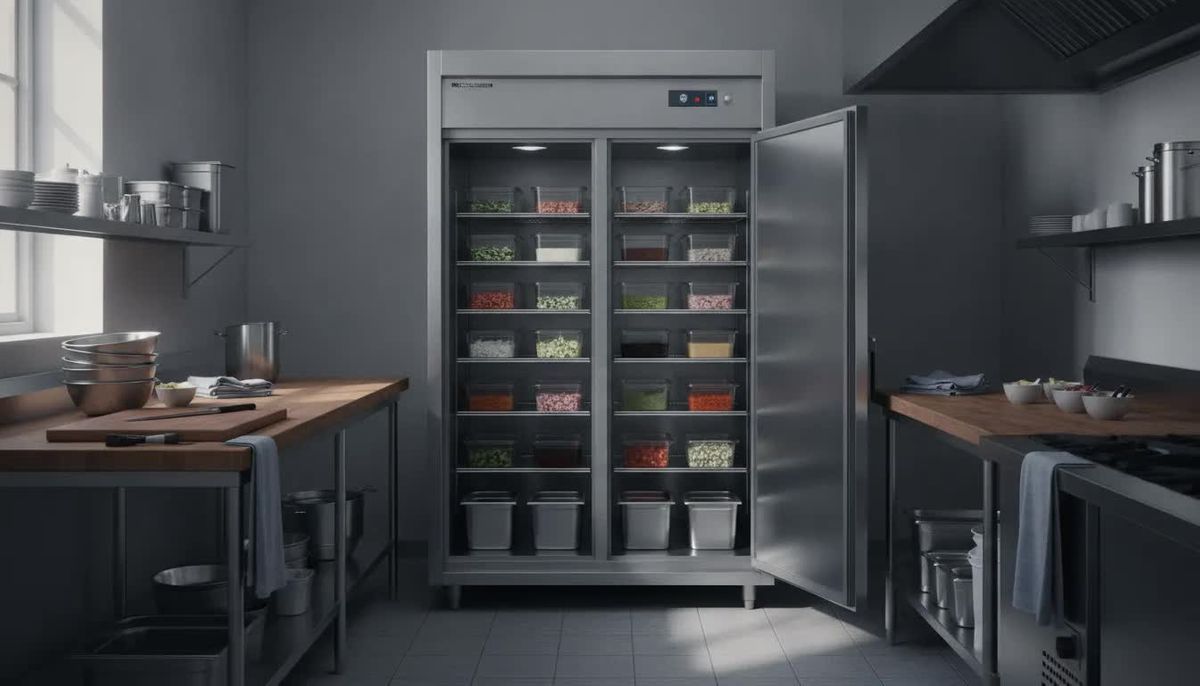
Do I need a commercial refrigerator? You need one when the product you store has to stay cold through a business day, not a household evening. A kitchen fridge is built for a family opening the door a handful of times. A restaurant line, a cafeteria, a clinic, or a small market opens the door all shift. If cold product is part of how you serve customers, a household unit is the wrong machine for the job.
Request commercial refrigeration service
This is a need test, not a buying guide. It walks through the operating factors that settle the question for a facility manager or owner in New Hampshire, Massachusetts (excluding Cape Cod), or Rhode Island. It does not pick a brand, size a walk-in, or quote a price. Those come after the need is clear, usually with a look at the space.
Do I need a commercial refrigerator for this operation?
Start with what you store and how the day actually runs. The equipment follows the operation. A reach-in that looks fine in a catalog can still be the wrong call if the product, the door traffic, or the room does not match it.
Ask these questions before you spend money or keep using a household fridge:
Does any product you sell or serve have to stay cold to stay safe or usable?
Will staff open the door many times an hour during service, not a few times a day?
Does the volume fill more than one household refrigerator, or will it within a year?
Does a health inspector, a client contract, or your own standard require cold holding at a set temperature?
Can the room, the electrical service, and the floor support a commercial unit?
If the first two answers are yes, you need commercial refrigeration. Volume, code, and the building decide whether that means a single reach-in, several reach-ins, or a walk-in. A no on the first question usually means you do not.
What product forces the decision
The product is the first filter. Time and temperature control for safety food, often called TCS food, has to stay cold. That includes dairy, cut produce, cooked proteins, deli meat, prepared salads, and many sauces. If those items sit above a safe cold temperature, bacteria grow. The FDA Food Code is the model most state and local health departments use. It sets cold holding for that food at 41°F (5°C) or below. Your local code is what an inspector enforces, so confirm the number with your health department before you rely on it.
Product that is not food can still force the same decision. Clinics, labs, and some offices hold temperature-sensitive supplies. A florist holding cut flowers, a caterer staging a plated event, and a market holding dairy all have the same problem. The box has to recover after the door opens, and it has to do that on a service day.
A household refrigerator is a poor fit for that work. It is designed to hold food that is already cold and to be opened now and then. Commercial units are built for heavier door traffic, faster temperature recovery, and a full day of use. That difference is the reason the question comes up in the first place.
You can still use a household unit for staff lunches, beverages, and items that do not have to stay at a food-safe temperature. Keep that fridge out of the production flow. Do not let it become the backup for product you sell.
Door traffic, volume, and the room
Door traffic is the factor owners underestimate. During a lunch rush, a line cook may open a reach-in every few minutes. Each opening dumps cold air and pulls warm kitchen air in. A commercial refrigerator is built to pull the box back down. A household unit is not, and the interior temperature climbs while the compressor runs long.
Volume is the second factor, and it is about the week, not the photo on day one. Count what you hold at the busiest point. A Friday prep list, a weekend banquet, or a Monday delivery can double what a Tuesday looks like. If one household fridge is already full, a second household fridge is rarely the fix. Two household units still recover slowly, still lack the door hardware, and still take floor space a planned reach-in would use better.
Walk through the room before you assume a unit will fit:
Measure the doorway, the hall, and the final spot, including hinge swing.
Check that the floor is level and can carry the weight once the box is full.
Confirm the outlet, the circuit, and the clearance the condenser needs.
Note heat from a nearby cooking line, a dishwasher, or direct sun on an exterior wall.
Leave a path so staff can load product without blocking an exit.
A unit that fits the product but not the room becomes a service problem. Blocked airflow, a door that cannot close fully, and a circuit that trips are all building issues, not equipment defects. Those are worth seeing before anyone orders a box.
Operating factor: Product.; Household refrigerator is enough: Staff food and drinks only.; Commercial refrigeration is the fit: Food or supplies you sell that must stay cold..
Operating factor: Door traffic.; Household refrigerator is enough: A few openings across the day.; Commercial refrigeration is the fit: Repeated openings through a service period..
Operating factor: Volume.; Household refrigerator is enough: One shelf of product, stable week to week.; Commercial refrigeration is the fit: More than one household unit, or growing fast..
Operating factor: Cold holding.; Household refrigerator is enough: No inspector and no client temperature rule.; Commercial refrigeration is the fit: A health code, contract, or policy sets a limit..
Operating factor: Room.; Household refrigerator is enough: A break-room corner.; Commercial refrigeration is the fit: A kitchen, servery, or sales floor with heat and traffic..
Reach-in, prep table, or walk-in
Once the need is real, the type follows the work. This is still a decision about the operation, not a model list.
A reach-in is the usual first unit. It holds backup product near the line and keeps the door cycle short. One or two reach-ins cover many small restaurants, cafeterias, and markets that are past a household fridge but not ready for a walk-in.
A refrigerated prep table earns its place when cooks assemble the same cold items all service. The pans stay in reach, and the base holds backup. It is a poor choice as the only box, because the open rail loses cold air and the base is small.
A walk-in makes sense when volume, delivery size, or prep timing no longer fits reach-ins. It also makes sense when more than one station has to pull from the same cold store. A walk-in is a small room. It needs floor space, a drain plan, and a condenser location that can reject heat. It is the wrong first purchase for a business that is still proving its menu.
Display cases are a sales tool. They belong where a customer sees the product, not where a cook stores tomorrow's prep. If you only need backup storage, skip the glass door. Glass looks better and costs more to run.
B&B Mechanical Services installs, maintains, and repairs commercial refrigeration for restaurants, hotels, hospitals, and office cafeterias. The work covers walk-in coolers, walk-in freezers, and other business equipment. If the decision is already made and the question is how the box gets installed or kept running, the commercial refrigeration page is the right next stop.
When a household unit is still the right call
Not every cold box in a commercial building should be commercial equipment. A household refrigerator is a reasonable choice when all of these are true:
It holds staff meals, drinks, or samples that are not for sale.
The door opens a few times a day.
No health rule or client contract sets a cold-holding temperature for what is inside.
The volume fits one unit with room to spare on a busy day.
That pattern shows up in offices, small retail back rooms, and job trailers. It also shows up as a drink fridge at a host stand. Using a household unit there is fine. Using it to hold the product you sell is the step that creates risk.
There is a middle case. A catering company that cooks two days a week, or a church kitchen used on weekends, may not need a walk-in. It may still need one commercial reach-in if the food is TCS food and the door is open through prep. Frequency of use does not erase the temperature rule. It only changes how large the box should be.
If you already own a commercial unit and it is warm, iced up, or short-cycling, that is a service question, not a buying question. Hidden problems in small grocery boxes, and the cost of a neglected walk-in, are covered in other posts. This one stops at the decision to have the equipment.
Questions to settle before you buy or lease
A clear need still leaves a short list of operating questions. Answer them before you sign a purchase order or a lease. They keep the first unit from becoming a replacement project.
Who owns the temperature log? Someone on the shift should check and write down the box temperature, not assume the dial is right. A thermometer in a glass of water inside the box tells you more than the air reading on the display. If nobody owns that log, the equipment will not save the product.
What happens on the busiest day? Write down the delivery, the prep, and the service window. If the box would be packed solid on that day, you are already undersized. Packed boxes block airflow, and blocked airflow is how a full refrigerator runs warm in the middle.
Where does the heat go? Every refrigerator moves heat from the box to the room. In a tight kitchen that heat becomes the air conditioner's problem. If the kitchen is already hard to cool, talk about the condenser location before you add another box. Commercial HVAC and refrigeration share the same rooms more often than owners expect.
Who services it? Commercial equipment needs a contractor who works on business refrigeration, not a household appliance tech. Ask how you will request service, what information to have ready, and whether a maintenance visit is part of the plan. B&B Mechanical has served businesses since 2000. Same-day service is available depending on technician availability and location. That is not a promise that every call is same-day, and it is not a promise that a warm box is restored on a clock.
Planned maintenance is separate from the buying decision, and it is worth naming now. A unit you cannot get serviced is a unit you should not buy. The HVAC maintenance page describes how scheduled visits work for the building systems around that equipment.
A simple way to make the call
Use the product, the door, and the rule. If you store food or supplies that must stay cold, and people open the door through the workday, you need a commercial refrigerator. If an inspector or a contract names a cold-holding temperature, the decision is already made. Volume and the room then choose reach-in, prep table, or walk-in.
If the box is only for staff food, opens a few times a day, and holds no product you sell, a household refrigerator is enough. Write that limit down so the next manager does not turn it into production storage.
If you are past the decision and need the equipment installed, repaired, or put on a maintenance visit, start with the commercial refrigeration service. Have the address, the equipment type, and what the box is doing ready when you call. That is the useful handoff from this question to the work.
Call (978) 667-4644 to talk through commercial refrigeration for your building.
Frequently asked questions
Do I need a commercial refrigerator if I only sell packaged drinks?
Often a commercial glass-door unit is the better fit, because customers open it all day. A household fridge can hold a small staff drink supply. It is a weak choice for a sales cooler that is opened through the shift. The test is door traffic and whether the product has to stay cold, not whether you cook on site.
Can I use two household refrigerators instead of one commercial unit?
You can store more food that way, but you do not solve the duty cycle. Both units still recover slowly, and both still lack commercial door hardware and service support. If the product must stay at a cold-holding temperature through service, two household refrigerators are a stopgap, not the answer.
What temperature should cold food be held at?
The FDA Food Code model sets cold holding for time and temperature control for safety food at 41°F (5°C) or below. State and local health departments adopt their own rules from that model. Check the code your inspector uses before you set a thermostat or write a policy.
Does a weekend kitchen need commercial refrigeration?
If the kitchen holds TCS food and the door is open through prep, yes, even if you cook only two days a week. The box can be smaller than a seven-day operation needs. Frequency does not remove the temperature requirement. A household unit is fine only for food that is not part of what you serve.
Who services commercial refrigeration in New Hampshire, Massachusetts, and Rhode Island?
B&B Mechanical Services installs, maintains, and repairs commercial refrigeration for businesses in New Hampshire, Massachusetts excluding Cape Cod, and Rhode Island. Call (978) 667-4644 or use the contact form. Same-day service depends on technician availability and your location.