
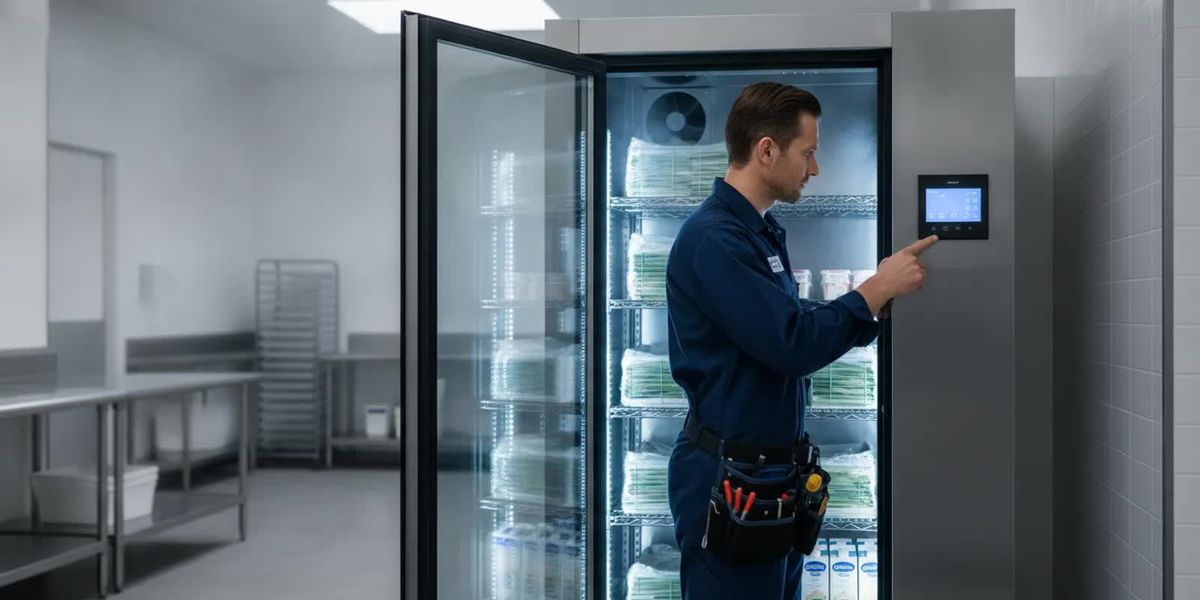
A walk-in cooler that cannot maintain its usual conditions can disrupt a business and put stored products at risk. Knowing when to request walk in cooler repair helps a facility manager respond promptly without attempting work that requires refrigeration expertise. Temperature changes, recurring frost, water, unusual noises, and unreliable operation are useful reasons to investigate further.
Request commercial refrigeration service
What signs suggest a walk-in cooler needs repair?
Look for changes from the equipment’s normal pattern. A single symptom may not identify the cause, but repeated or worsening signs deserve attention. Record what you observe rather than guessing which component has failed.
The temperature is rising or fluctuating. Note the displayed reading and time. Compare it with the unit’s normal operating pattern and your facility’s procedures. A reading that continues to drift or does not recover as expected can point to a control, airflow, door, or refrigeration concern.
The system runs much longer or cycles differently. Continuous operation, frequent starts and stops, or a noticeable change in sound may indicate a problem. Do not assume the compressor is the cause; several conditions can affect runtime.
Frost or ice appears in an unusual place. Repeated buildup can relate to airflow, door use, defrost operation, or refrigeration performance. Avoid chipping ice with tools or changing settings unless your site procedures specifically allow it.
You hear a new or persistent noise. Note whether it is a rattle, buzz, click, or other sound, and when it occurs. Sound alone does not confirm a failed part, but it can help a technician narrow the investigation.
Water appears where it should not. Record whether it is inside the cooler, below the equipment, or around the doorway. Keep people clear of slippery areas and follow site safety procedures. Do not open electrical panels or handle wiring.
The door does not close or seal normally. Check for a visible obstruction and confirm that the door closes as intended. If hardware is damaged or a seal appears torn, request an assessment rather than forcing the door.
Stored products or the space have an unusual odor or condition. Follow your organization’s product-handling and safety procedures. The fact that a cooler appears to be running does not establish that products are safe to use.
Note when a symptom began and whether it is constant or intermittent. A brief log may show that it followed a delivery, cleaning, power interruption, or change in door traffic. This context helps a service conversation, but it is not a substitute for diagnosis.
What can staff safely check before requesting service?
Start with observations and basic checks that do not involve disassembly, electrical work, or refrigerant handling. Use your facility’s procedures whenever temperature-sensitive inventory may be affected.
Record the displayed reading. Write down the temperature, time, and any recent readings available to your team. If your facility uses a separate monitoring device, follow its established process for comparing readings.
Check the door and immediate surroundings. Look for a cart, package, or other visible obstruction. Confirm that staff are not propping the door open unnecessarily.
Look for obvious airflow blockage. From a safe position, note whether stored materials appear to block vents or the evaporator area. Follow equipment instructions and workplace procedures; do not move items in a way that could create a separate safety or inventory issue.
Review recent events. Note delivery volume, extended door opening, cleaning, power interruptions, or other changes near the time the symptom began. Do not reset controls merely to clear an alarm unless authorized by your procedures.
Escalate product concerns internally. Follow your company’s food-safety, inventory, and temperature-control process. A refrigeration service call addresses equipment; it does not decide whether products can be kept or served.
Request professional attention if the condition persists. If readings remain outside the range your operation requires, or recurring frost, leaks, abnormal noise, or unreliable operation continues, arrange an assessment.
Avoid opening electrical compartments, bypassing controls, adding refrigerant, or attempting repairs to sealed refrigeration components. These actions can create safety hazards and complicate diagnosis. For food-service operators, consult the FDA’s food safety resources and apply requirements relevant to the operation and local authority.
When is an operating issue more than a one-time event?
Some conditions have an obvious operating explanation. A delivery cart blocking the door, for example, may be corrected safely by removing the obstruction if facility procedures allow it. Afterward, observe the unit according to normal procedures. A symptom that returns, persists, or has no clear everyday explanation deserves professional attention.
Monitor after correcting a clear cause
If the door was left ajar or an item blocked an airflow path, document the condition, correct it safely, and check the system again under your normal process. Record whether it returns to its usual pattern and whether the symptom recurs. Avoid repeated control adjustments to force a desired reading. If recovery does not occur as expected, contact service.
Do not treat one reading as a diagnosis
A displayed temperature is useful evidence, not an explanation. The same change can follow from a door issue, restricted airflow, a control problem, or a refrigeration-system fault. Share the reading and its timing with the technician instead of naming a part you suspect.
Keep product decisions separate
Equipment troubleshooting and product disposition are separate decisions. Follow your organization’s established procedures for temperature-sensitive inventory. If water, damaged wiring, or another hazard threatens staff, keep people away and use the site’s safety or emergency process.
What details help a technician assess the cooler?
Concise, factual observations make the initial discussion more useful. Gather what is available without delaying an urgent internal response:
The facility location and confirmation that the equipment is a walk-in cooler.
What changed, when it started, and whether the condition is continuous or intermittent.
Recent readings and any alarm or control-panel message, copied exactly.
Visible water, frost, damage, unusual sounds, or door concerns, including where they appear.
Recent power interruptions, deliveries, cleaning, or other changes staff observed.
Who can authorize work, who should receive updates, and any access or safety requirements for the equipment area.
If the cooler supports a critical process, explain the operational impact when asking about service options. If there are multiple units, identify the specific location or unit using a label that is already visible. Do not remove panels to locate equipment information.
How does a symptom log make the service call clearer?
A log should be consistent, brief, and factual. It does not need to identify the mechanical cause. For example: “Monday, 7:15 a.m.: display reading higher than prior shift; delivery cart had been beside the door; obstruction removed under site procedure; alert observed again Tuesday.” That sequence gives a technician events to investigate rather than an unsupported conclusion such as “compressor failed.”
Use the same fields for each entry:
Date and time of observation.
Displayed reading or exact alarm wording.
What staff saw or heard and where.
Recent activity such as deliveries, cleaning, or a power interruption.
Action taken within site procedures and what happened afterward.
Do not let documentation delay contacting service when conditions remain outside operating requirements or a safety concern is present. The log supports a focused conversation; it does not replace the facility’s response process.
Why can similar symptoms have different causes?
A walk-in cooler depends on refrigeration components, controls, airflow, door condition, and how the space is used. A warm reading, for example, might relate to restricted airflow, a control issue, a door that does not close properly, or a refrigeration-system concern. Frost may also have more than one explanation. A symptom by itself cannot establish which part needs attention.
A useful assessment considers operating conditions and the equipment involved. Replacing a part based only on a symptom may miss the underlying issue. B&B Mechanical Services provides commercial refrigeration service, including repair of walk-in coolers and freezers, and commercial HVAC support for businesses in New Hampshire, Massachusetts excluding Cape Cod, and Rhode Island. The company’s commercial HVAC and refrigeration blog provides additional service information for business readers.
What should a business clarify when arranging repair?
Identify who can authorize work, how a technician can reach the cooler, and any site rules for entering mechanical or storage areas. If the business operates several facilities, specify the affected location and the operational impact. Make clear who will receive updates and who can approve additional work if findings change.
Ask the service provider to explain findings and recommended next steps before work proceeds. Confirm the scope being authorized and how your team should communicate a change in symptoms. An initial phone conversation does not establish the final diagnosis or guarantee that repair can be completed during the first visit; the work required depends on what an assessment finds.
Same-day service may be available depending on location and technician availability, but timing is not guaranteed. If the need is urgent, describe the current condition and facility location when calling so the provider can discuss available options. Do not assume that a same-day visit means the repair will be completed that day.
For additional commercial service information, visit the company’s business HVAC and refrigeration resource page. Keep requests specific: name the equipment, describe the observed symptom, and explain whether the condition is ongoing.
How can routine attention help staff notice change?
Routine observation does not replace professional maintenance, but it can make changes easier to recognize. Assign responsibility for checking readings according to site procedures. Keep a record of recurring alarms, unusual sounds, visible ice or water, door concerns, and service visits. Consistent notes can reveal a pattern and give a technician useful context.
Keep the area around equipment accessible and use the cooler according to its operating instructions. Avoid overloading the space or blocking airflow, and make sure staff know how to close the door. If several shifts use the room, a brief handoff note can alert the next team to a reading or event rather than letting a recurring symptom appear to be new.
For planned upkeep, discuss preventive maintenance with a commercial refrigeration provider and clarify which equipment and checks are included. Ask how observations should be recorded and when staff should request service between planned visits. The appropriate approach depends on the equipment and conditions at the facility; one schedule should not be assumed to suit every operation.
Frequently asked questions
When should a business call for walk-in cooler repair?
Contact a service provider when a temperature problem persists or returns, or when recurring frost, unusual noise, unexplained water, or unreliable operation appears. Follow internal product-handling procedures while arranging an equipment assessment.
Can facility staff diagnose a cooler problem?
Staff can document symptoms and check for obvious conditions, such as a visible obstruction, when site procedures allow. Similar symptoms can have different causes, so diagnosis and repairs should be handled by a refrigeration professional.
Should staff chip away ice inside the cooler?
Avoid using tools to chip ice or making adjustments outside approved procedures. Document unusual or recurring buildup and request an assessment.
Is same-day service guaranteed?
No. Same-day service may be available depending on location and technician availability. Contact the provider to discuss the situation and current options.
How can facility teams make a useful repair-versus-monitor decision?
Staff do not need to decide which component has failed, but they can sort observations by urgency and persistence. A one-time reading after a busy delivery, followed by a return to the facility’s usual pattern, is different from a reading that remains abnormal or repeatedly rises during normal operation. Use the business’s response rules rather than a universal temperature threshold, because the acceptable range and product response depend on the operation and its procedures.
Record the sequence, not just the worst reading
Suppose the morning shift finds a warmer-than-usual display after a long unloading period. Record the reading and time, note that the door was open frequently, and follow the site’s monitoring process. If the later check returns to the unit’s usual range and no other symptom appears, keep the event in the log and share it during the next handoff. If readings continue to move away from normal, or the condition returns on a later shift, contact a refrigeration provider rather than treating the first explanation as proven.
Escalate when risk or recurrence increases
A repeated alert, visible water near a walking path, a persistent abnormal noise, or a cooler that does not recover as expected changes the decision. Keep staff safe, apply internal inventory controls, and request an assessment. Do not wait for several symptoms to appear together. One recurring sign can be enough to justify professional attention, even when the equipment still seems to be running.
This approach helps avoid two common errors: calling every brief change a confirmed equipment failure, and dismissing a developing problem because the unit has not stopped completely. Describe what happened, how often, and what the team did within its procedures. Let a qualified technician assess the system and advise on equipment work.
What can a service assessment clarify?
A service visit is intended to investigate the equipment condition, not simply replace whatever part a symptom seems to suggest. The technician can consider the reported pattern alongside system operation and inspection findings, then explain what was identified and what work is recommended. The actual scope depends on the equipment and findings; an observation made by staff should not be presented as a diagnosis.
Before authorizing work, ask for a plain-language explanation of the observed issue, the proposed work, and whether any additional decision may be needed if inspection reveals another concern. Confirm who has authority to approve work and who should receive updates. If the recommendation changes from the original discussion, make sure the person responsible for approval understands the revised scope before proceeding.
For a business with several coolers, distinguish the affected unit from nearby equipment. A simple facility label, room name, or location description helps prevent confusion. If the problem is intermittent, provide the times it was observed and whether it coincided with deliveries, cleaning, a power interruption, or a change in use. These details make the conversation more specific without promising a particular repair outcome.
How should a business prepare the work area?
Preparation can make access easier while keeping staff and inventory processes in view. Follow the facility’s own safety and sanitation requirements, and avoid moving stored goods unless authorized. The person coordinating the visit can identify where the equipment is located, explain any access restrictions, and arrange for an authorized representative to be available for questions and approvals.
Keep the route clear where practical. Remove ordinary obstructions from access paths only if this can be done safely and without disturbing controlled inventory or creating another hazard.
Share site rules in advance. Explain sign-in, escort, restricted-area, or protective-equipment requirements that apply at the facility.
Have observations ready. Keep the reading log, alarm wording, symptom timeline, and any relevant operating notes available to the person meeting the technician.
Set an approval contact. Make clear who can discuss recommendations and authorize a scope of work, especially when the usual facility manager is off site.
Maintain internal product controls. Use the organization’s procedures for any inventory concern; repair coordination does not determine whether goods should be retained or used.
These steps are organizational, not mechanical troubleshooting. Do not remove covers, reposition components, or try to make equipment easier to reach by handling electrical or refrigeration parts. If the space has a hazard such as standing water or exposed wiring, follow the facility’s safety response and alert the service coordinator before anyone enters the area.
How can operations prevent useful information from being lost?
Walk-in coolers are often used by multiple shifts, departments, or vendors. A symptom can seem isolated when each person sees only one part of the sequence. A consistent handoff makes it easier to distinguish a new event from a recurring one. Keep the record in the location or system your business already uses, and make sure the next responsible person knows where to find it.
For example, a shift note might say: “Tuesday, 6:40 a.m.: display higher than prior check; door traffic heavy during delivery; no visible water; next check recorded at 7:10.” If the condition is still present at the next check, the team can add that fact and contact service. That is more useful than a note saying only “cooler broken,” because it preserves timing and observations without suggesting a cause.
When the issue has been addressed, retain the service information with the equipment record according to company practice. Comparing later symptoms with prior observations may help staff report a recurrence clearly. It does not mean that a past repair predicts the current fault; the equipment and circumstances still need to be assessed on their own merits.
Get help with a commercial walk-in cooler
If your cooler has a persistent temperature concern or another recurring symptom, record what you observed and request an assessment. Clear notes about the equipment and its recent behavior can help start a focused service conversation. Keep product-safety decisions within your facility’s established procedures.
Schedule a call about commercial refrigeration service
For commercial walk-in cooler repair in New Hampshire, Rhode Island, or Massachusetts outside Cape Cod, contact B&B Mechanical Services to discuss the equipment and available service options.