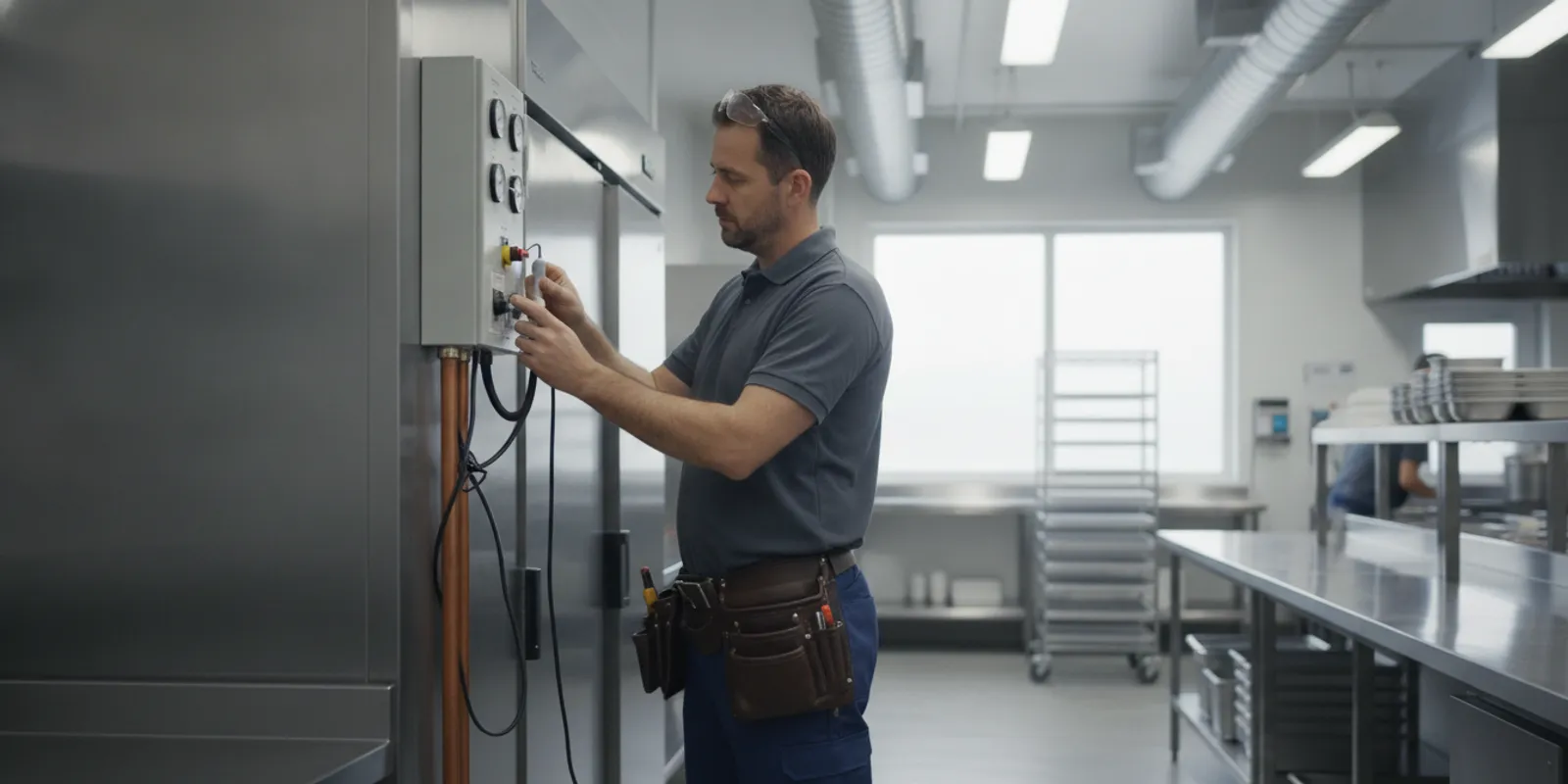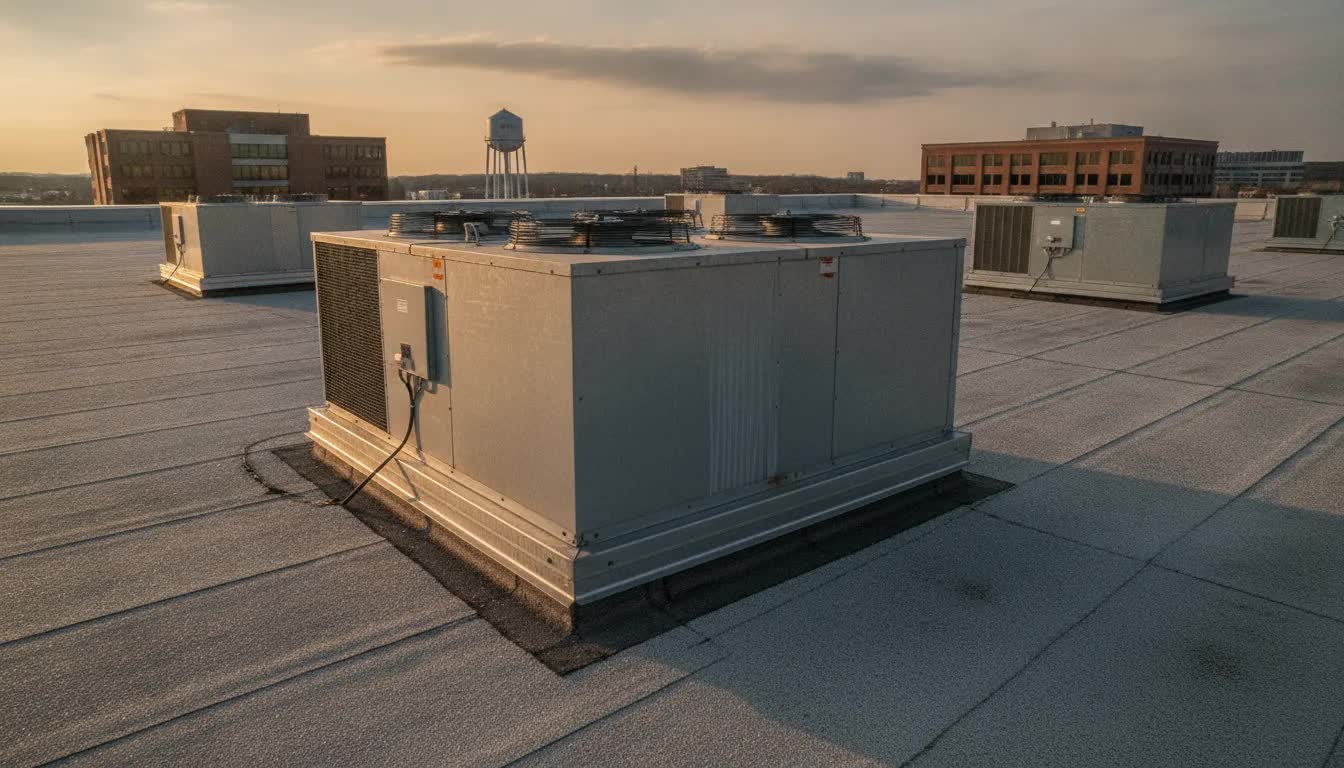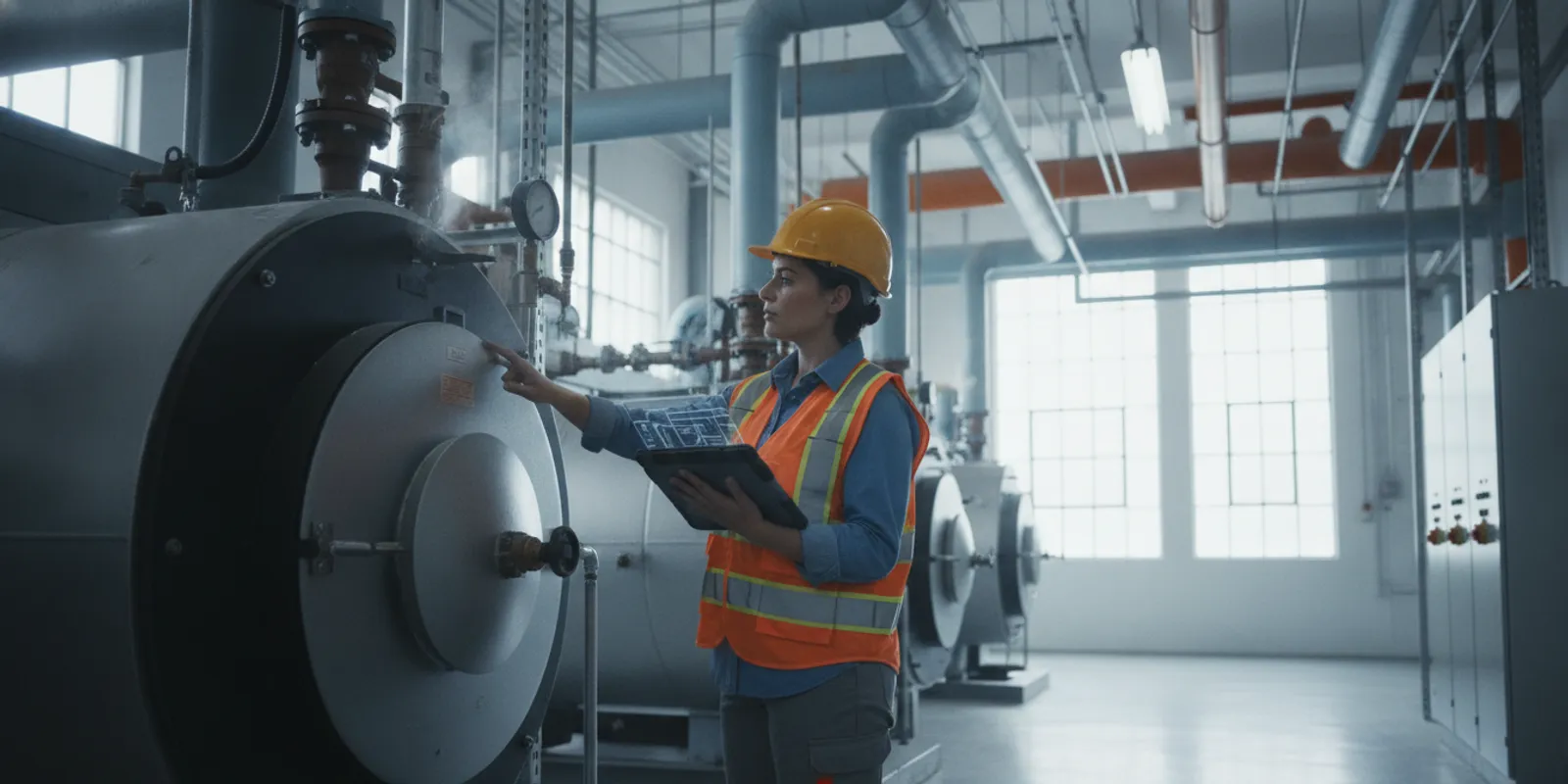
A commercial heating system maintenance checklist gives facility teams a repeatable way to record equipment condition and operating concerns before seasonal demand increases. Use it to capture observations, not to diagnose or repair components. A consistent record helps staff identify changes, explain a concern to a service provider, and decide which findings need prompt attention.
Request commercial heating service
What should a commercial heating system maintenance checklist include?
A useful checklist connects four things: the equipment, the spaces it serves, what staff can observe, and the history that may explain a change. Technical tasks depend on the equipment, manufacturer instructions, applicable requirements, and the qualifications of the person doing the work. Keep visual observations separate from testing, adjustments, and repairs.
Start with one record for each asset. Include a consistent equipment identifier, building and room location, areas served, review date, and the name or role of the observer. If the building has a control-system label or asset number, use the same identifier on the checklist and work order. This simple step matters when a facility has several similar units: a note assigned to the wrong unit can waste time and misdirect follow-up.
Set up the form to capture the following basics:
- Asset and location: Equipment ID, physical location, and served zone or department.
- Review context: Date, time, observer, operating status, and whether the observation came from a routine walk-through or an occupant report.
- What was noticed: Visible condition, sound, odor, displayed message, or change in comfort, described without guessing at a cause.
- History and action: Recent work, related work-order number, follow-up owner, and whether an assessment or approval is pending.
Use the equipment manufacturer’s documentation and the facility’s procedures to determine which technical maintenance tasks are appropriate. Staff should not remove panels, bypass safety controls, touch energized components, or make settings changes outside their authorization. OSHA provides workplace safety resources; use applicable requirements together with site-specific procedures and qualified professional guidance.
How should teams review the equipment area?
A routine visual walk-through can identify changes that deserve a closer look. It is not a substitute for a qualified inspection. Follow site access and safety procedures, and do not move stored materials or approach a hazard in a way that creates additional risk. Record what is visible and pass concerns to the responsible facilities lead.
- Access and housekeeping: Note whether the equipment area and access route are clear. Record standing water, debris, stored items, or visible damage. Follow facility policy for correcting an obstruction.
- Exterior condition: Describe visible corrosion, damaged insulation, residue, or a sign of leakage. State where it appears and whether it is new or recurring. Avoid assigning a cause from appearance alone.
- Sound and vibration: Write down whether a sound is rattling, humming, squealing, banging, or another recognizable pattern. Include the location, time, and whether it occurs at startup, continues during operation, or comes and goes.
- Odors, smoke, or unusual emissions: Treat these as conditions that require prompt attention under the facility’s safety procedures, not as routine observations to watch casually.
- Labels and access information: Note if the equipment identifier is missing or hard to read, or if access instructions need updating.
Specific descriptions are more useful than diagnoses. “New vibration near the west boiler at startup, first noticed Monday” records an observation. “The pump is failing” states a conclusion that requires assessment. If a finding presents an immediate safety concern, follow emergency procedures rather than waiting for the next checklist review.
What should you document during normal operation?
Use approved building controls and ordinary operator or occupant reports to describe how the system appears to serve its intended areas. Do not change schedules or setpoints simply to test a theory. Capture enough context for someone else to understand when the concern occurs and whether it affects one area or several.
- Record the date and time, the affected rooms or zones, and whether the condition is continuous or intermittent.
- Copy a displayed alarm or message exactly. If site policy permits a photo, identify the equipment and date in the record.
- Note whether a symptom appears during startup, a schedule transition, a particular operating period, or after a recent change.
- Compare the report with the approved operating schedule and earlier notes, but do not assume a schedule is the cause.
- Ask the person reporting a comfort concern what they observed, when it began, and whether it has happened before.
A room that feels cold does not by itself identify a problem with the boiler, furnace, rooftop unit, or another heating component. Controls, air distribution, occupancy, doors, recent renovations, and building-envelope conditions can contribute to similar reports. Separating the actual observation from a suspected cause gives a technician a better starting point.
How do you check served spaces and airflow clues?
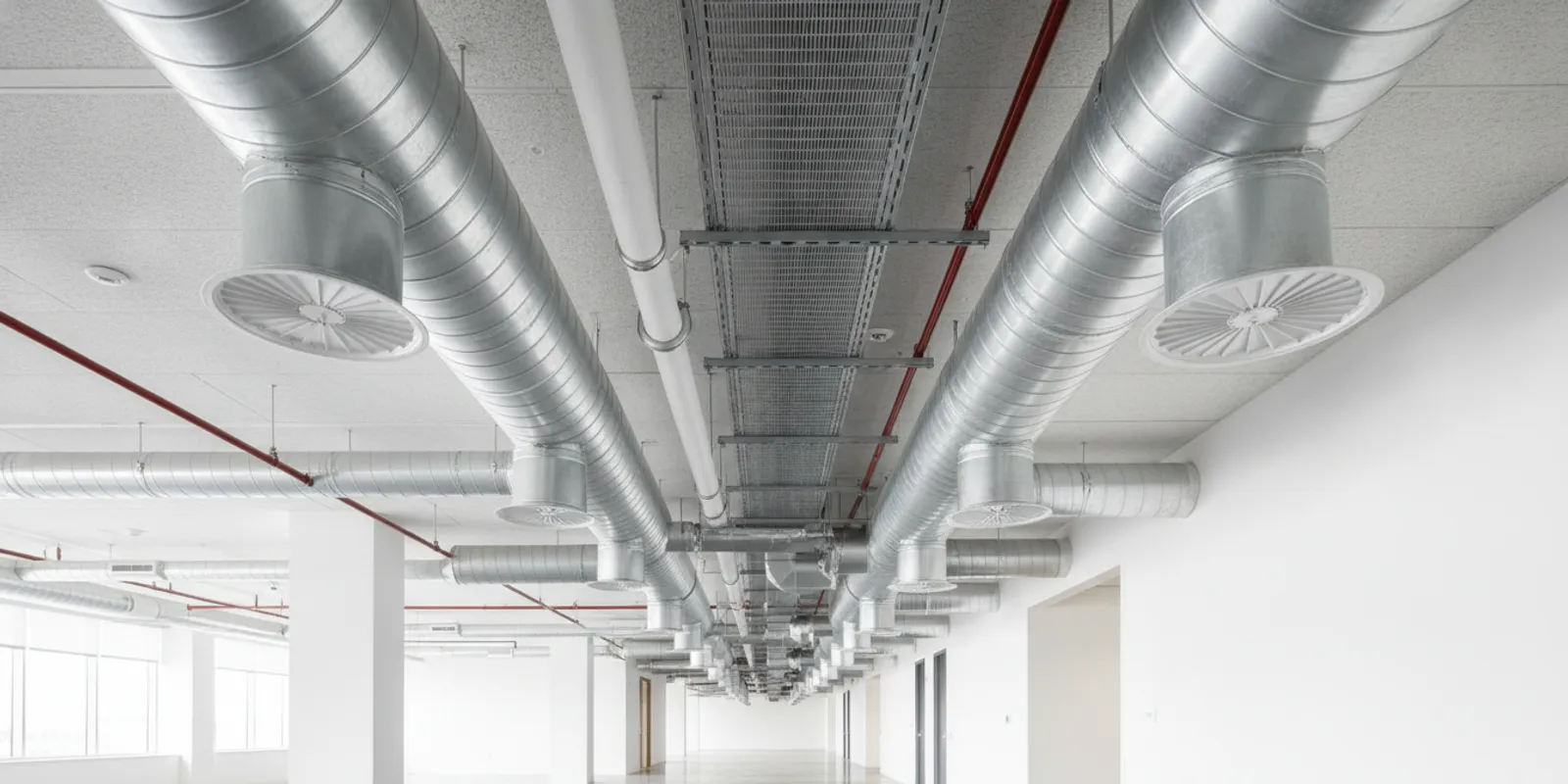
For spaces served by forced-air equipment, document noticeable changes in airflow, unusual drafts, and recurring hot or cold spots. Identify the room and whether the concern affects nearby areas. Record relevant changes in room use, occupancy, furniture, or construction. These details help explain context; they do not establish that a duct, filter, fan, or heating component is responsible.
Facility staff should check accessible items only when their assigned duties and site procedures allow it. If filter condition and replacement are part of routine work, record the filter type and service date. If a filter appears damaged, unusually loaded, or incorrectly seated, document the condition and follow the approved process. Do not substitute another specification without authorization, because the appropriate selection depends on the equipment and its requirements.
Note visible damage to accessible ductwork or insulation, and whether furniture or stored items appear to obstruct a supply or return path. For example, if a meeting room has been converted to storage, record that change alongside a report of uneven heat. Photos may help when permitted by site policy; include the location and asset reference so the image remains useful after it is shared.
Which findings need prompt attention?
Use facility escalation procedures to sort findings by safety, operating impact, and recurrence. A potential hazard should not wait for a routine maintenance cycle. A persistent loss of heat, repeated alarm, unusual odor, visible leak, or new sound may warrant timely professional assessment. The appropriate response depends on what is observed, the equipment, and site procedures.
For non-urgent items, record what happened and assign an owner and next step. A minor exterior change with no reported operating effect may be documented for review according to the facility’s process, as long as it does not present a hazard. A repeated symptom deserves more context than a one-time report: note how often it occurs, whether it is becoming more pronounced, and whether earlier work addressed a related concern.
Consider a multi-zone office with one cool room, an intermittent control message, and an obstructed mechanical-room entrance. Record these as separate items. For the room, include the time and who reported it; for the display, copy the message and identify the asset; for the entrance, follow site policy on clearing or escalating the obstruction. Do not assume that the displayed message caused the comfort complaint. Separate records make it easier to route each issue to the right person and confirm closure.
In another example, a warehouse team hears a new rattle at startup but has not received a heat complaint. Record when it happens, whether it is repeatable, and whether any recent service or displayed message is relevant. The absence of a comfort report does not prove that equipment is in good condition, and the sound alone does not identify a failed part. A service request should describe the pattern and ask for assessment rather than prescribe an unconfirmed repair.
How can you make records useful over time?
Use the same fields at every review and preserve the date of each entry. Do not overwrite an earlier note when a condition changes; add a new entry so the sequence remains clear. Keep records tied to individual assets rather than relying on one general building note. If a technician recommends follow-up, document who owns the action, whether approval is required, and whether the work was completed.
Choose neutral descriptions. Instead of “unit sounds bad,” write down the sound, location, and timing. Instead of “heating is broken,” state which areas are affected, when the issue occurs, and any displayed message. If a symptom stops, record when it stopped and whether any work or operating change occurred around that time. This does not prove what resolved the issue, but it keeps the history factual.
For a portfolio, standardize equipment labels and the minimum observation fields, while allowing each property to add local instructions. Keep records separate by facility, clarify who receives urgent findings, and identify who is authorized to approve service. Portfolio summaries can reveal repeated reports, but unlike systems may have different components and operating needs. A pattern is a prompt for review, not a substitute for an equipment-specific assessment.
What information belongs in a service request?
A clear request helps the service provider understand the issue without turning an unconfirmed theory into a work instruction. Prepare the building address, equipment identifier and location, affected spaces, observed symptoms, timing, displayed messages, relevant history, and urgency. Identify the person coordinating access and the person who can discuss or approve next steps.
When several items need attention, list them separately and explain their relative impact on building operations. Mention whether the problem is ongoing or intermittent, and include recent changes only when known. Distinguish direct observations from assumptions: “the display showed this message” is different from “the control is defective.” If there are access restrictions or site procedures for mechanical areas, explain them before the visit is arranged.
For a recurring program, ask what equipment and tasks are included, how often visits are proposed, how findings are documented, and how additional work is presented for approval. Compare the written scope with the building’s equipment register and operating needs. Clarify exclusions and authorization requirements rather than assuming every maintenance arrangement includes the same tasks or schedule.
B\&B Mechanical Services provides commercial HVAC maintenance and repair for businesses in New Hampshire, Rhode Island, and Massachusetts excluding Cape Cod. Its commercial HVAC services page outlines the broader service offering, and the service-area information describes the stated territory. Same-day service availability depends on location and technician availability; it is not a promise of arrival or repair completion at a fixed time.
How should you prepare for a maintenance review?
Before a planned review, gather the asset list, recent work orders, known recurring concerns, and relevant operating schedules. Make sure the service provider can identify the equipment and reach the areas that require review, subject to facility access procedures. If the checklist has produced open items, mark which need assessment and which are being tracked for later review.
After a visit, compare the written findings with the original observations. Confirm that each recommendation is connected to the equipment or condition it concerns. Identify any additional assessment or repair that requires authorization, who will provide that authorization, and how the facility will track the decision. If work is deferred, record the reason and a follow-up owner rather than leaving the item without a next step.
A practical maintenance process separates routine observations, professional assessment, and approved corrective work. A checklist can support that process by improving the quality of records and handoffs, but it cannot guarantee that equipment will not fail or replace required technical work. For details about preventive HVAC maintenance, discuss the equipment, proposed scope, and recordkeeping needs with the provider.
Schedule a call about preventive maintenance
How can a team run the checklist consistently?
Assign an owner for the checklist and define which observations are expected during routine facility rounds. Keep the process simple enough to repeat, but make clear which tasks require a qualified service professional. Before a review, confirm the correct asset list and the approved route through the building. During the review, record conditions as they are observed rather than relying on memory at the end of a shift.
Use a clear status for each item, such as open, referred for assessment, work approved, or closed. A status should describe the next step, not imply that a repair has been completed. Add the date and responsible person when an item changes status. If one finding depends on another, note the relationship without combining them into a single vague entry. For instance, an access restriction and an intermittent heating complaint may need separate owners even if they involve the same area.
At handoff, review open items with the next shift or facilities contact. Point out urgent findings, explain what action has already been taken under site procedures, and identify any decision still awaiting approval. When the same complaint returns, link the new record to earlier reports while preserving the current observation. This allows a manager or technician to see the sequence without treating a past assumption as a confirmed cause.
Periodically check whether the checklist still matches the equipment register and site responsibilities. Renovations, equipment replacements, renamed spaces, and changes to access procedures can make an old form misleading. Update labels and instructions through the facility’s normal document-control process, while retaining enough historical information to understand older records. A checklist that reflects the current building is easier for multiple staff members to use consistently.
Frequently asked questions
How often should a commercial heating system be reviewed?
Set the review and service schedule using manufacturer guidance, system requirements, site operating conditions, and the maintenance program. A visual checklist supports ongoing records but does not replace professional maintenance or any required inspection.
Can facility staff complete every checklist item?
Staff can record observations and perform tasks assigned under approved site procedures. Testing, adjustments, and repairs should be handled by appropriately trained and authorized personnel using applicable safety practices.
Does a checklist prevent heating equipment from failing?
No checklist can guarantee uninterrupted operation. Consistent observations may help a team notice changes and provide useful information for assessment, but they do not establish the cause of a problem or ensure a particular outcome.
What should I send with a service request?
Provide the site and equipment location, symptoms, timing, affected areas, displayed messages, relevant service history, urgency, and access instructions. Identify the contact who can coordinate the visit and discuss authorization.
A consistent checklist gives facility teams a factual record and a clear handoff when heating-system findings need professional assessment.